
Which self needs changing?
Digging at the root of human identity.

If we are to adapt to ecological change, we need to change ourselves. But this begs one of the most important questions any of us will ever ask: what is my ‘self’?
Modern psychology is based on an idea of the human self that has become highly popularised. I rarely meet anyone, for example, who isn’t familiar with the term ‘ego’. Today, if you ask someone to point to themselves, they will most likely point to their body. “I” am contained within my skin. This makes perfect sense because that is what we have been taught for hundreds of years by the dominant stories of industrial culture, inside which contemporary psychology squarely sits.
But it isn’t true.
Skin & Wave
Our skin is a semipermeable membrane across which billions of interactions continuously occur. Some are molecular, some atomic, and many more are likely subatomic or quantum.
Without needing to tackle the thorny questions about the nature of consciousness, “I” am not just inside my skin.
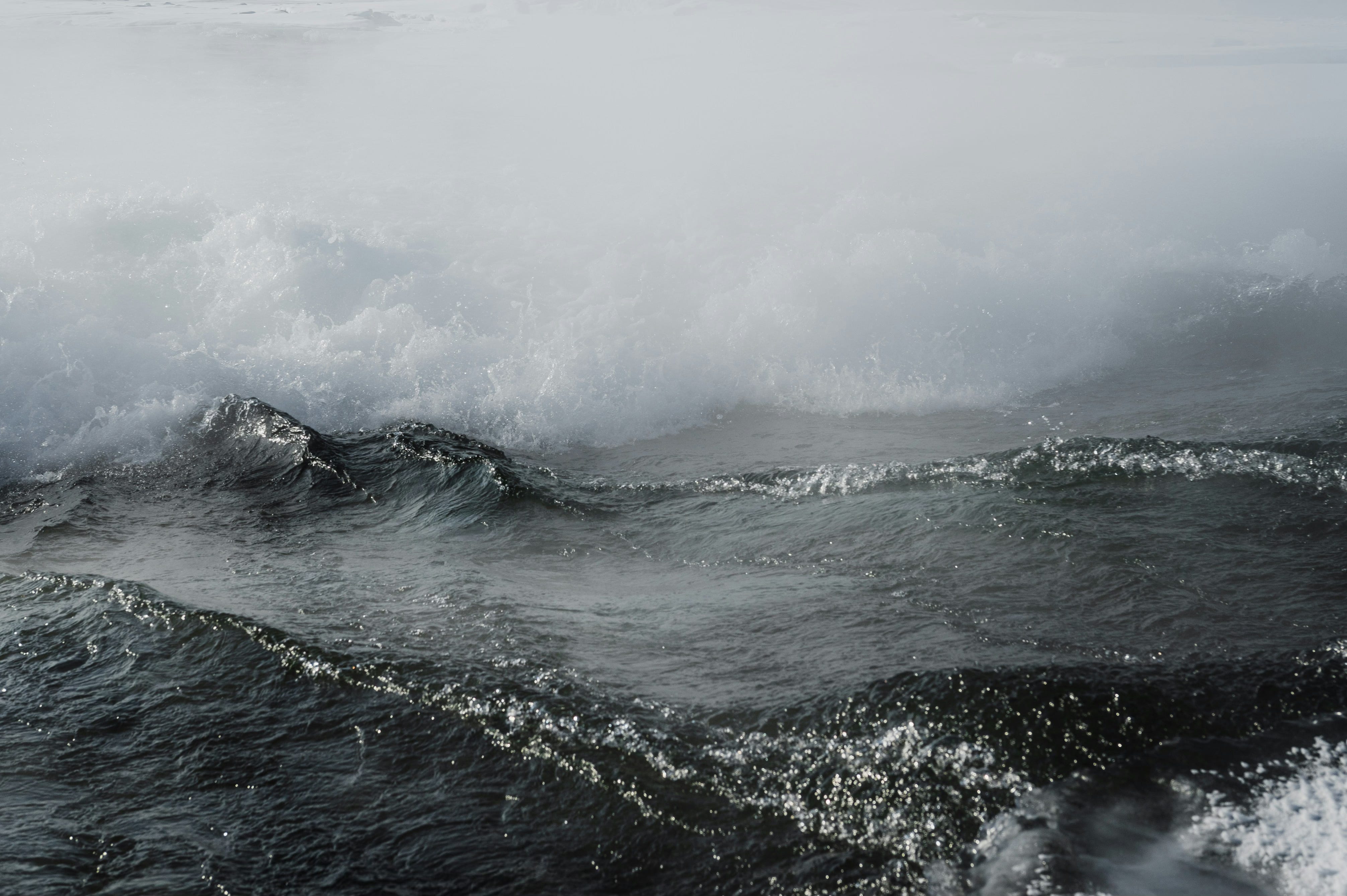
I find a wave in a river a helpful metaphor. You can see the wave, photograph it, draw or paint it, even point it out to others: it has an “intersubjective” reality, as Edmund Husserl would say. But if you scoop it from the river into a bucket, it vanishes - only to be replaced by another, ‘different’ wave.
The form we recognise as a ‘wave’ exists because of the rocks on the riverbed, the friction of air on the water, any material moving through it, the dimensions of time and space, and the interactions of light and energy. It is a product of its environment: the result of an infinite number of relationships with everything around and within it.
When removed from these relationships, it disappears.
The wave is a useful metaphor, but only because we have been so comprehensively conditioned to believe the human self is separate from nature. As any physicist would confirm, we are also waves.
If we are the product of our relationships with everything in the world - that is, with nature - then the self does not stop at the skin. We do not exist in a vacuum; we only exist ‘in relationship’.
Our Vanishing Self
Our dominant culture is not based on this profoundly simple physics. In our modern daily lives, we live as if we are separate from the rest of nature. That makes it possible for us to destroy the rest of nature, believing such activity to be somehow beneficial to humans. But - of course - because we are part of nature, we are destroying ourselves as well. If we remove ourselves from the relationships that define us, we are diminished - or we cease to exist altogether. Like the wave, we vanish.
We do not exist outside nature because we cannot exist outside it.
Dig Deep
If we want to challenge and change our dominant industrial culture, we cannot rely on the narrow definition of the self offered by contemporary psychology, because it is foundational to that culture. The skin-bound ego will always conflict with the ‘others’ - other people, other species, other ecosystem processes.
The individualised self misguidedly seeks to maintain its illusory shape, unaware that it can only really exist without it.
Unfortunately, nearly every change programme I have ever seen stops short of asking what self (or selves) it is trying to change. They focus on knowledge and technique, frameworks and values, strategy and policy, technology and implementation. These things can be helpful, of course, but they are not at the root of change.
That is why, I believe, we haven’t yet successfully responded adequately to the social and ecological crises of our time: we haven’t dug deep enough yet.
We must begin with the premise that our task is to help people shift from a narrow, skin-bound sense of self to one that is understood purely as a product of relationships. This includes more-than-human relationships, which are by far the ones that define us the most.
We have to start by digging at the root of human identity.
Without this foundational shift in selfhood, programmes and projects that aim to lead and support personal, social and systemic change will always be shallow, temporary and ineffectual. Just Google “change leadership” for endless examples.
Learn more about facilitating processes that heal our illusions of separation from the rest of nature on my upcoming course:
OUTDOOR ECOTHERAPY TRAINING
Professional Development Course - Starts: July 2026
SIX MONTHS | ONLINE | LIVE CONTENT | SMALL GROUP